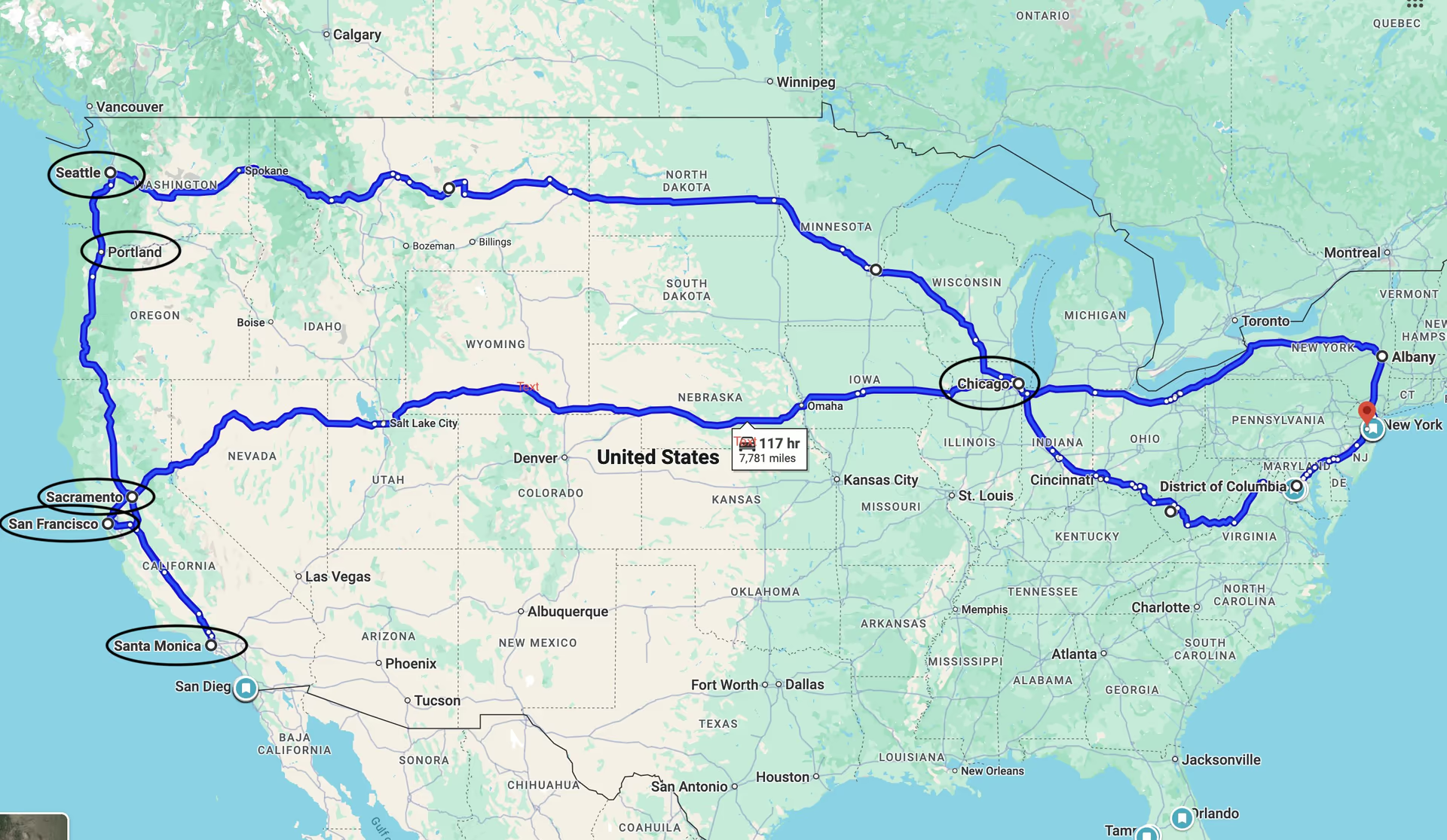
The trip ended in two movements: one last Pigeon Forge pass on Friday morning, then the long return north through Roanoke and back to Edison on Saturday.
Pigeon Forge as the Other Half
If Gatlinburg is the compressed mountain gateway, Pigeon Forge is the full strip. It stretches the area’s entertainment side into something broader, flatter, and more car-oriented. The two places are close enough to feel like one destination system, but they have different personalities.
Friday morning became a set of photo stops before leaving Tennessee. That was the right way to handle Pigeon Forge at the end of the trip: not as a full new itinerary, but as a visual summary of the other half of the Gatlinburg area.
By Friday morning, the vacation was already beginning to turn toward home, but Pigeon Forge still had one more job. It showed the scale of the attraction corridor we had been circling all week. Gatlinburg is narrow and vertical; Pigeon Forge is wider, louder in a roadside way, and more spread out. It feels less like a mountain town and more like a long family-entertainment runway.
The photo-stop approach suited that perfectly. We were not trying to do every attraction. We were documenting the visual character of the place: the facades, signs, giant themed buildings, wheels, fountains, and roadside landmarks that make Pigeon Forge feel almost like an outdoor catalog of family vacation possibilities.
The Old Mill and Patriot Park near Traffic Light #7 gave the morning its older, more local-feeling stop: water wheel, waterfall, Patriot Missile, and Liberty Bell replica. Farther along, Alcatraz East and The Island showed the modern attraction layer, with the Alcatraz East exterior, the Great Smoky Mountain Wheel, and the Show Fountains.
The Old Mill area felt different from the louder strip. It had water, older textures, and a more settled feeling. Patriot Park added another kind of local memory with its monuments and open space. After several days of mountain views and bright attractions, that area made Pigeon Forge feel less one-note.
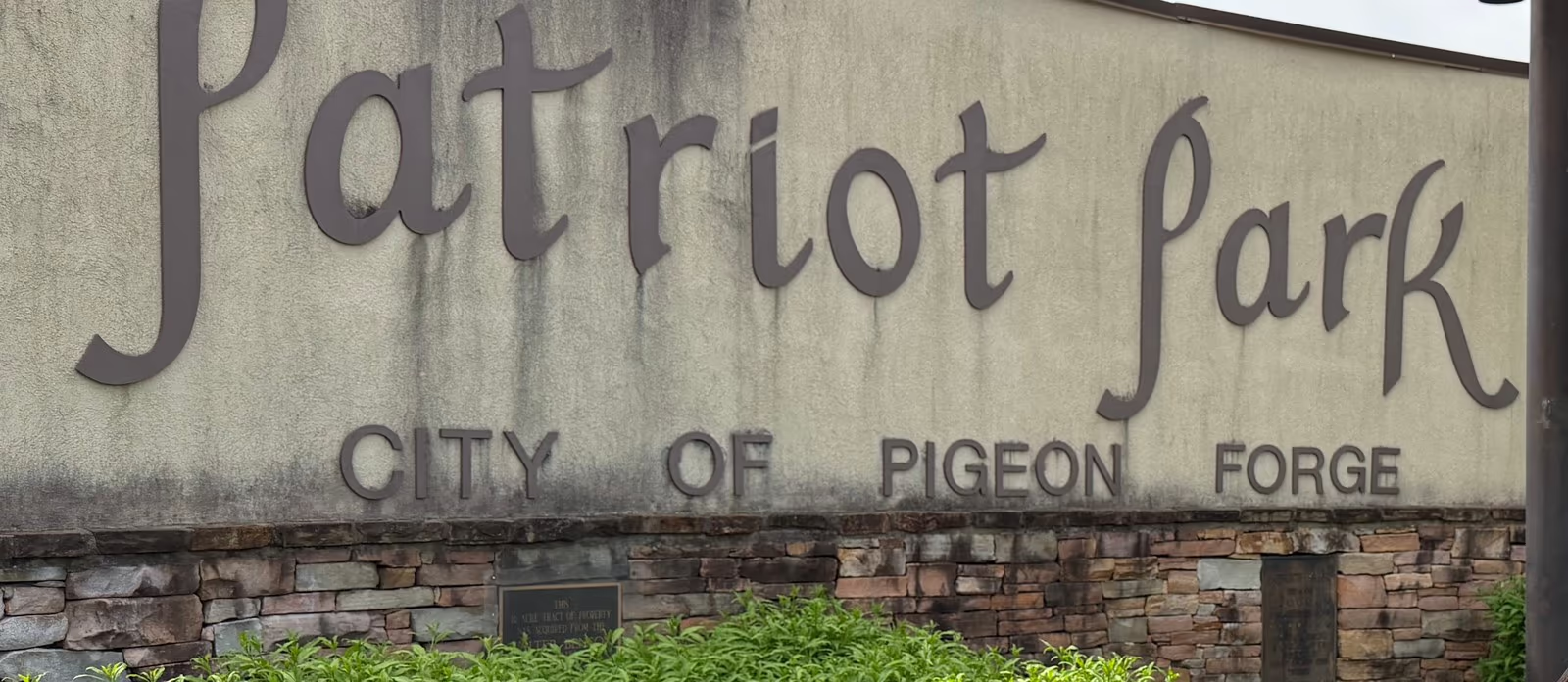
Then the road shifted back into spectacle. The Island and Alcatraz East brought the modern attraction side back into view. The Great Smoky Mountain Wheel is one of those landmarks that helps define a skyline even in a low-rise place. The Show Fountains added motion, and the whole area felt built for families to wander, pause, and be pulled in different directions.
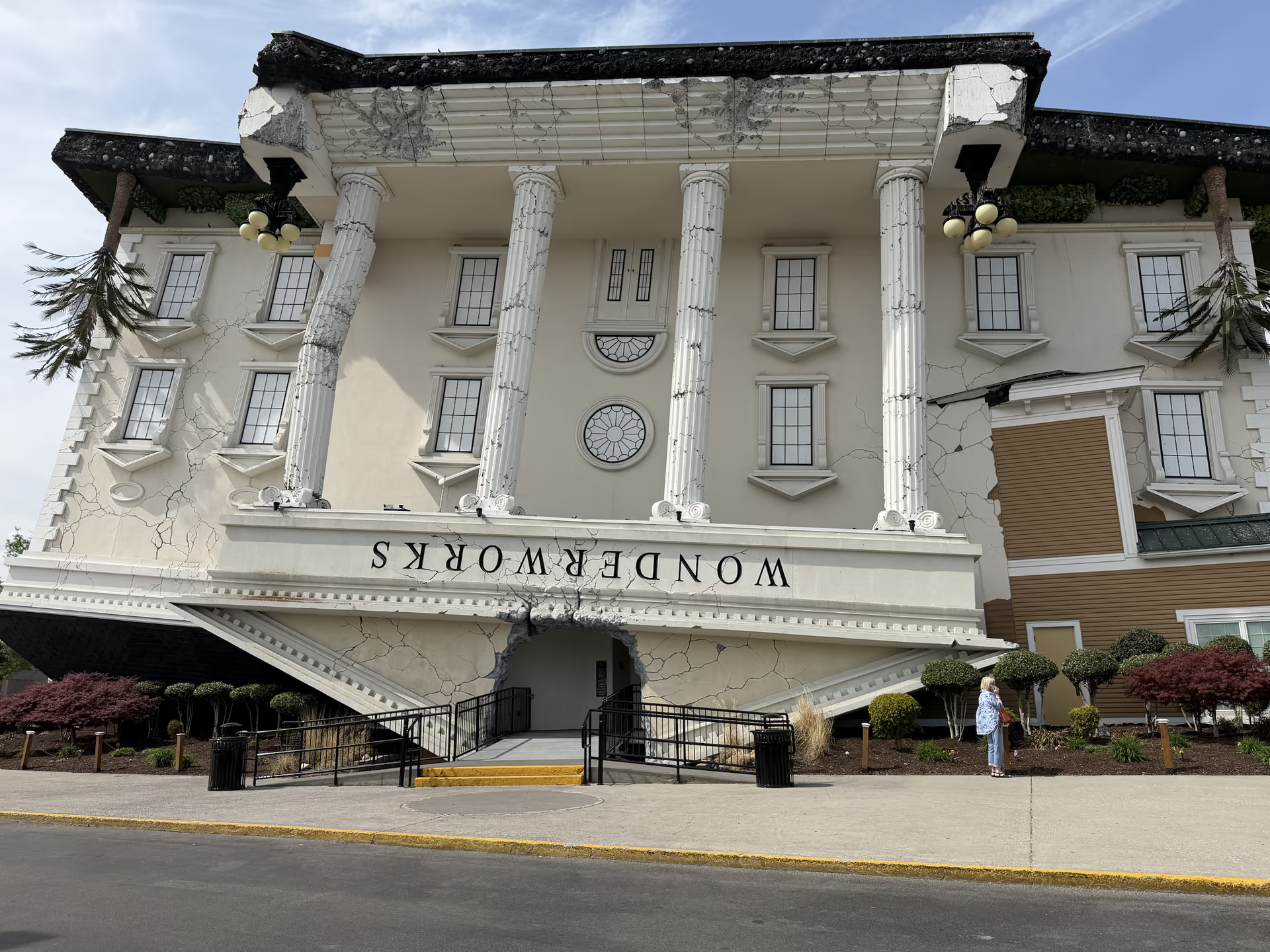
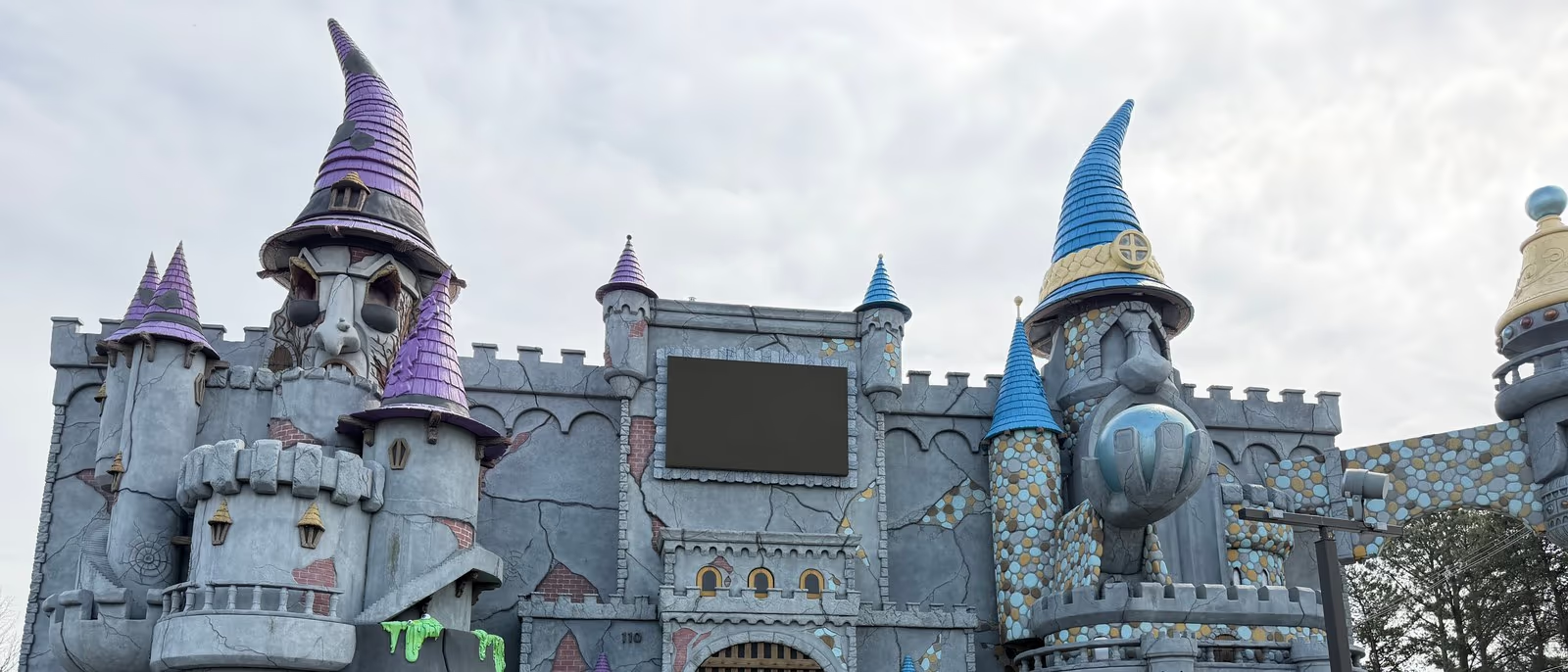
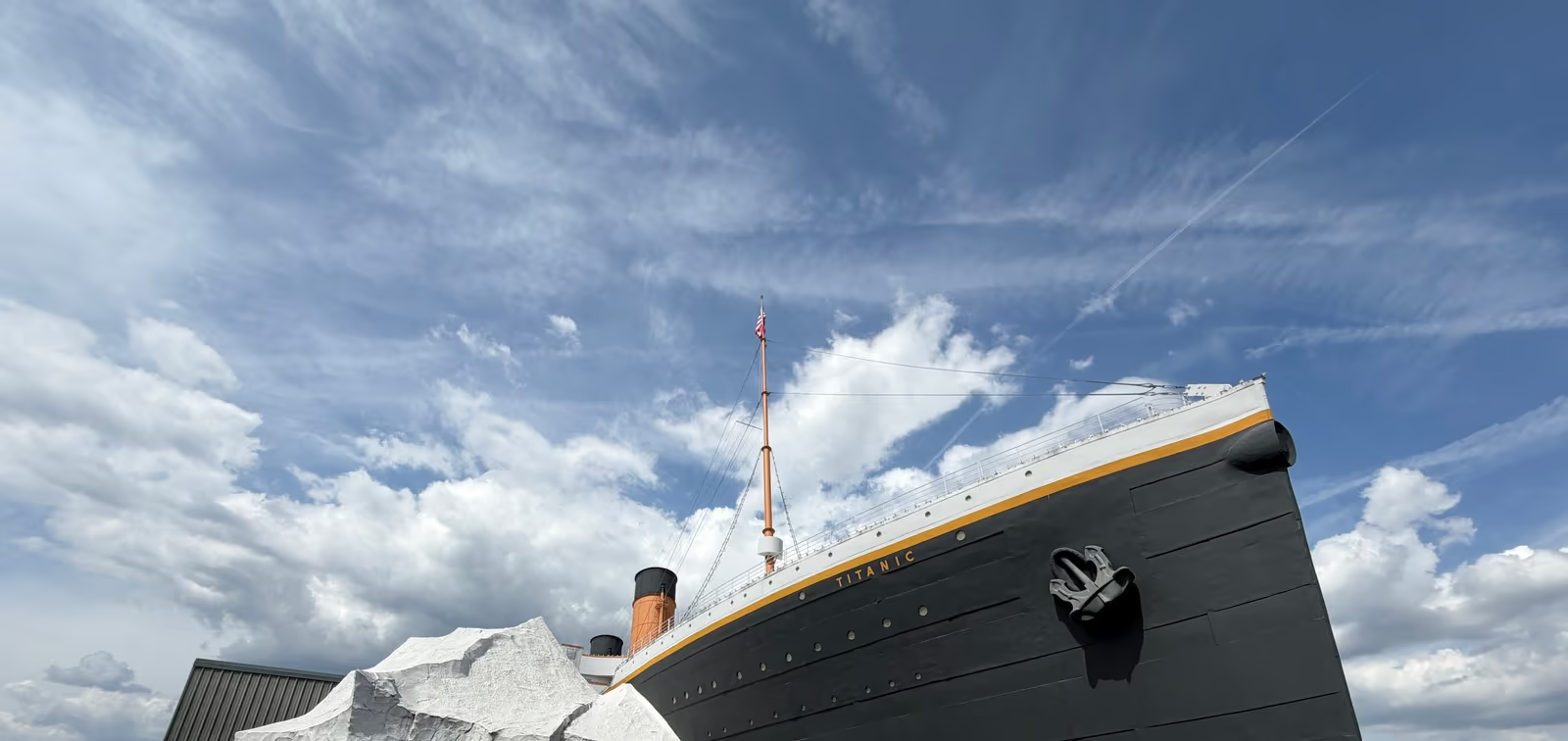
Then came the louder facades: Hollywood Wax Museum on Showplace Boulevard, with the Great Ape or King Kong facade and celebrity Mount Rushmore-style carving; the Titanic Museum, Beyond The Lens, and WonderWorks cluster, where the ship replica, fallen-building facade, and upside-down building turn the roadside itself into the attraction.
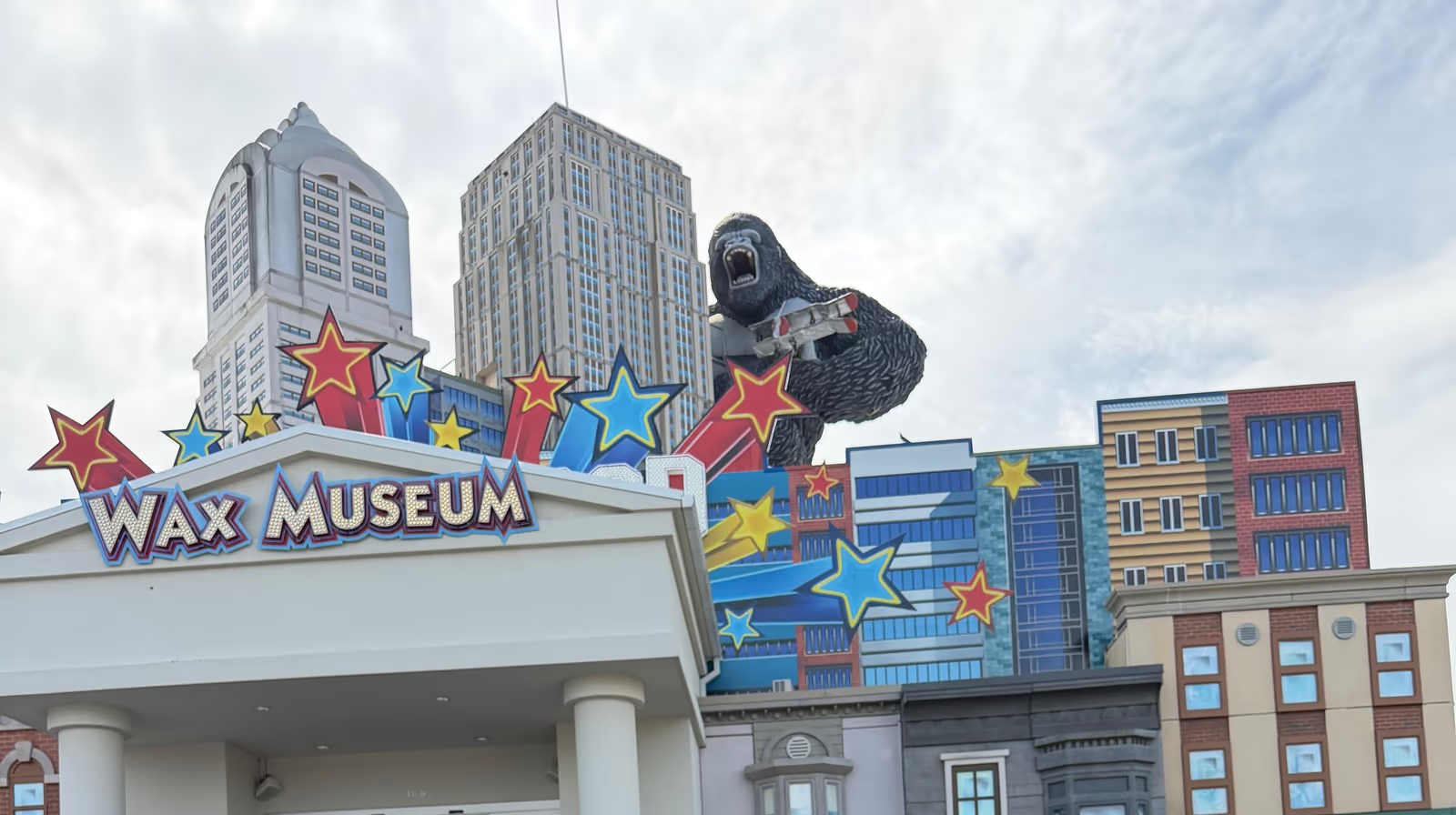
Those facades are impossible to ignore, and that is the point. A giant upside-down building, a ship against an artificial iceberg, a fallen-building illusion, a massive ape, carved celebrity faces - Pigeon Forge uses architecture as a kind of invitation. You do not need to enter every place for the strip to make an impression. The exteriors already tell you what kind of destination this is: playful, exaggerated, family-oriented, and comfortable with spectacle.
For a travel journal, it is tempting to treat those stops as less “serious” than the national park. But that would miss the actual character of the trip. The Smokies supplied the natural beauty; Pigeon Forge supplied the visual theater. The family vacation included both, and the final morning made that clear.
- The Old Mill and Patriot Park near Traffic Light #7.
- Alcatraz East and The Island between Lights #3 and #4.
- Hollywood Wax Museum on Showplace Boulevard.
- Titanic Museum, Beyond The Lens, and WonderWorks cluster.
Back to Roanoke
After Pigeon Forge, the vacation turned into a return drive. That change always has a particular feeling. The trip is still happening, but the direction has reversed. Every stop now belongs to the way home.
Roanoke returned as the practical midpoint, just as it had been at the start. This time it did not need to introduce the trip. It only needed to hold the family for one night before the final drive.
The return to Roanoke also gave the trip a quiet symmetry. At the beginning, Roanoke had been the threshold before Tennessee. On the way back, it became the place where the Smokies ended and the Northeast began to re-enter the mind. Same city, different emotional function.
Return drives are strange because everyone is tired in a different way. The car is no longer full of anticipation; it is full of stories, photos, half-finished snacks, jackets, and the small disorder of a week away. The family is still together, but the mental direction has changed. Home starts to become real again.
Home
The last day was Roanoke to Edison. No major attraction, no new mountain overlook, no final dramatic stop. Just the road back north and the quiet recalibration that happens after a week away.
The central discovery of the trip was not only Great Smoky Mountains National Park, although the park was the reason to go. It was the unusual pairing around it: serious natural beauty on one side, dense family entertainment infrastructure on the other, all close enough that a single day can move between trail, overlook, arcade, tram, and downtown lights.
That discovery felt stronger after the final morning in Pigeon Forge. The area is not only popular because the Smokies are beautiful. It is popular because the region has built an entire family ecosystem around that beauty. If the weather changes, there are indoor options. If the children are tired of trails, there are games and rides. If the adults want views, there are overlooks, lifts, bridges, and scenic drives. If everyone is tired, downtown can still produce a low-effort evening.
That combination explains why Gatlinburg and Pigeon Forge work. They have options for different weather, ages, energy levels, and moods. The place is not subtle, but family trips are not always improved by subtlety. Sometimes the best destination is the one with another workable plan nearby.
The trip was busier than a quick outline makes it sound. Roanoke Star, Cades Cove, Gatlinburg downtown, Alum Cave Trail, Ober Mountain, Newfound Gap, Kuwohi, Cherokee, SkyPark, Lynn Camp Prong Cascades, Arcadia, Pigeon Forge photo stops, and the return drive all fit into one week. Some days were mountain days. Some were attraction days. The best days were both.
That is why the ending felt satisfying. We had not done every possible thing in the Smokies area, and we did not need to. The trip had shown us the shape of the place: a national park with deep natural beauty, paired with two towns that know exactly how to keep a family occupied when the hiking boots come off.
End of the Gatlinburg and Smoky Mountains series.
Community Thoughts
Loading comments...