Across America
by Rail
Part One ended with the California Zephyr arriving in Emeryville after 49 hours of some of the most spectacular landscape the American West has to offer. Part Two picks up where the Zephyr dropped me — in Sacramento, with a connecting bus, an overnight stay, and a two-hour regional train that would deliver me to the edge of the Pacific.
Sacramento: California's Quiet, Confident Capital
The California Zephyr deposits you in Emeryville, not Sacramento — a small Bay Area stop that serves as Amtrak's Bay Area hub. To actually reach Sacramento you take a connecting Thruway bus, which is exactly as unglamorous as it sounds. But Sacramento was worth the detour. I'd budgeted a night and a half here, expecting little more than a pleasant stopover city. What I found was a place entirely at ease with itself — not competing with San Francisco's drama, not performing for visitors, just being quietly, confidently Californian.
Sacramento is a city of enormous oaks. The streets downtown are canopied by trees so old and wide that in places they nearly touch across four-lane roads, turning the boulevards into green tunnels. Add the summer heat, the unhurried pace on the waterfront, and a downtown that manages to feel both historic and lived-in, and you start to understand why Californians who actually live here are quite fond of the place.
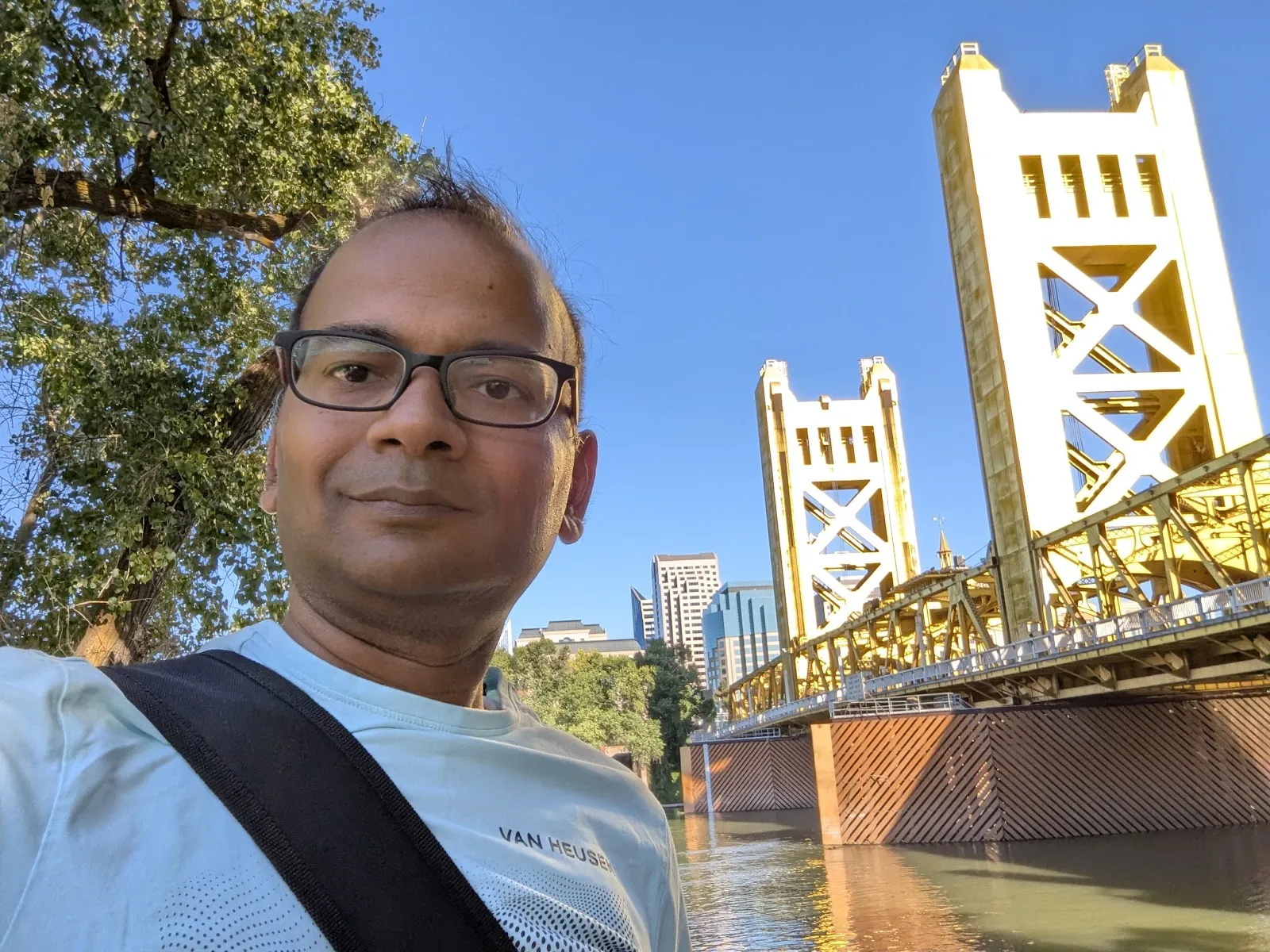
The Tower Bridge was the first stop, and it immediately earned its reputation. Built in 1935, it spans the Sacramento River in a deep, almost theatrical gold — a vertical lift bridge that still opens for tall vessels when the river traffic demands it. Standing on the bridge with the river moving below and the State Capitol dome just visible in the distance, the city suddenly made complete sense. Sacramento has genuine bones. The sky that August morning was the particular blue that only California seems to produce — the kind of blue that photographs can't quite replicate but that you chase anyway.
The Cathedral of the Blessed Sacrament
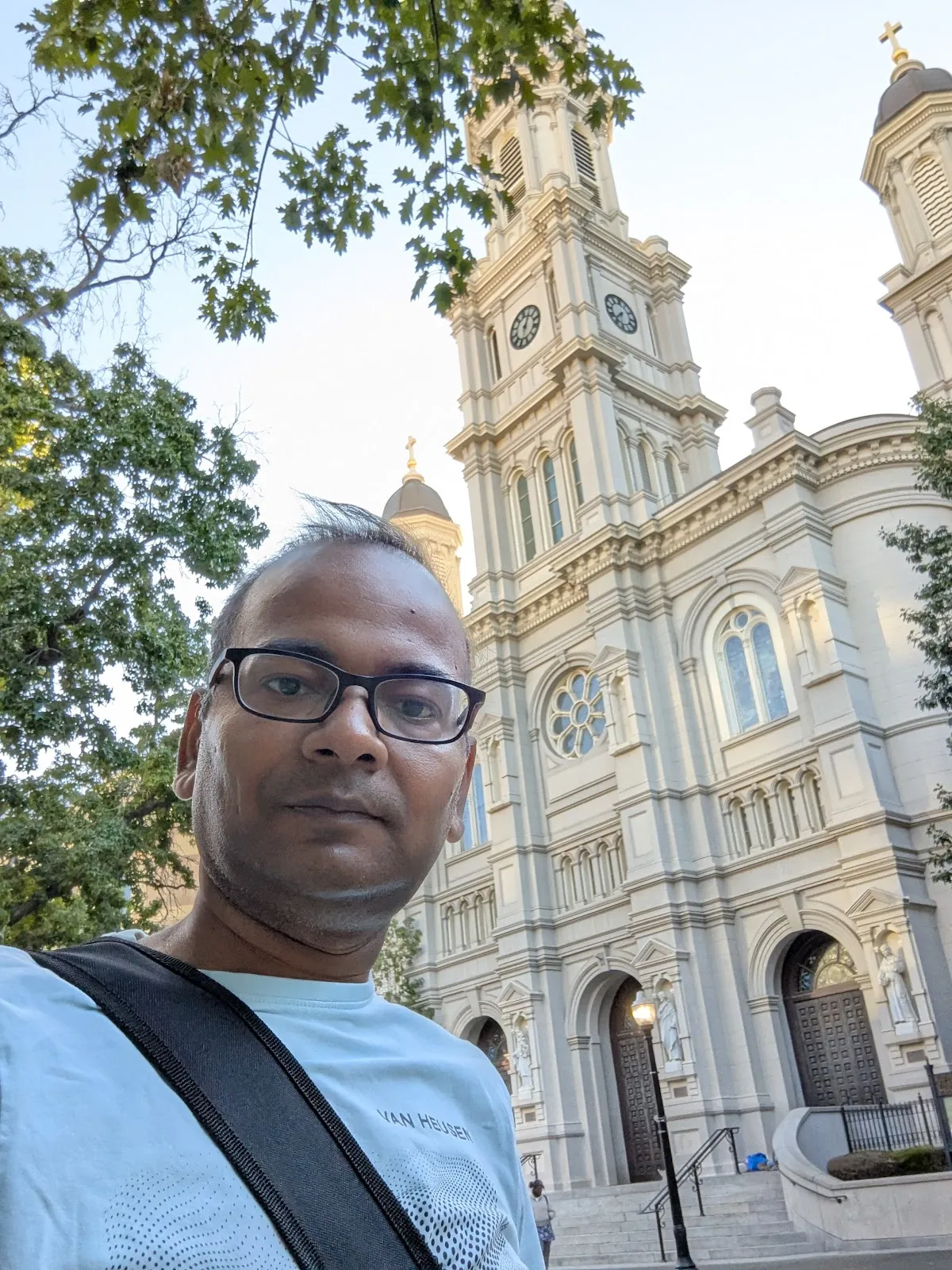
A short walk from the waterfront brought me to the Cathedral of the Blessed Sacrament on K Street — and it stopped me completely. The white neoclassical facade dominates its block with an authority that feels unmistakably European against the California streetscape. The clock tower climbs above the surrounding buildings with genuine confidence. Built in 1889, it is the largest Catholic cathedral on the West Coast, and you feel that scale from the pavement before you've crossed the threshold. There's something unexpectedly moving about finding this kind of architectural permanence in a city that was built in the chaotic scramble of the gold rush.
I spent the afternoon walking the grid. Sacramento's downtown is compact and sensible — a proper American street grid that makes navigation instinctive. Old Sacramento along the waterfront has a boardwalk character that feels genuinely 19th-century in places: wooden buildings, narrow alleys, the river always visible at the end of the street. I had dinner somewhere with a patio and a view of the water, and turned in early. The next morning I had a train to catch.
- Tower Bridge — walk across it, especially in the morning light
- Cathedral of the Blessed Sacrament — free, open daily, genuinely impressive
- Old Sacramento Waterfront — boardwalk atmosphere, easy to spend an hour
- Midtown has the best coffee and breakfast if you're staying overnight
- Capitol Park — 800+ trees, free, worth 30 minutes on a warm morning
Sacramento Valley Station: A Proper Send-Off
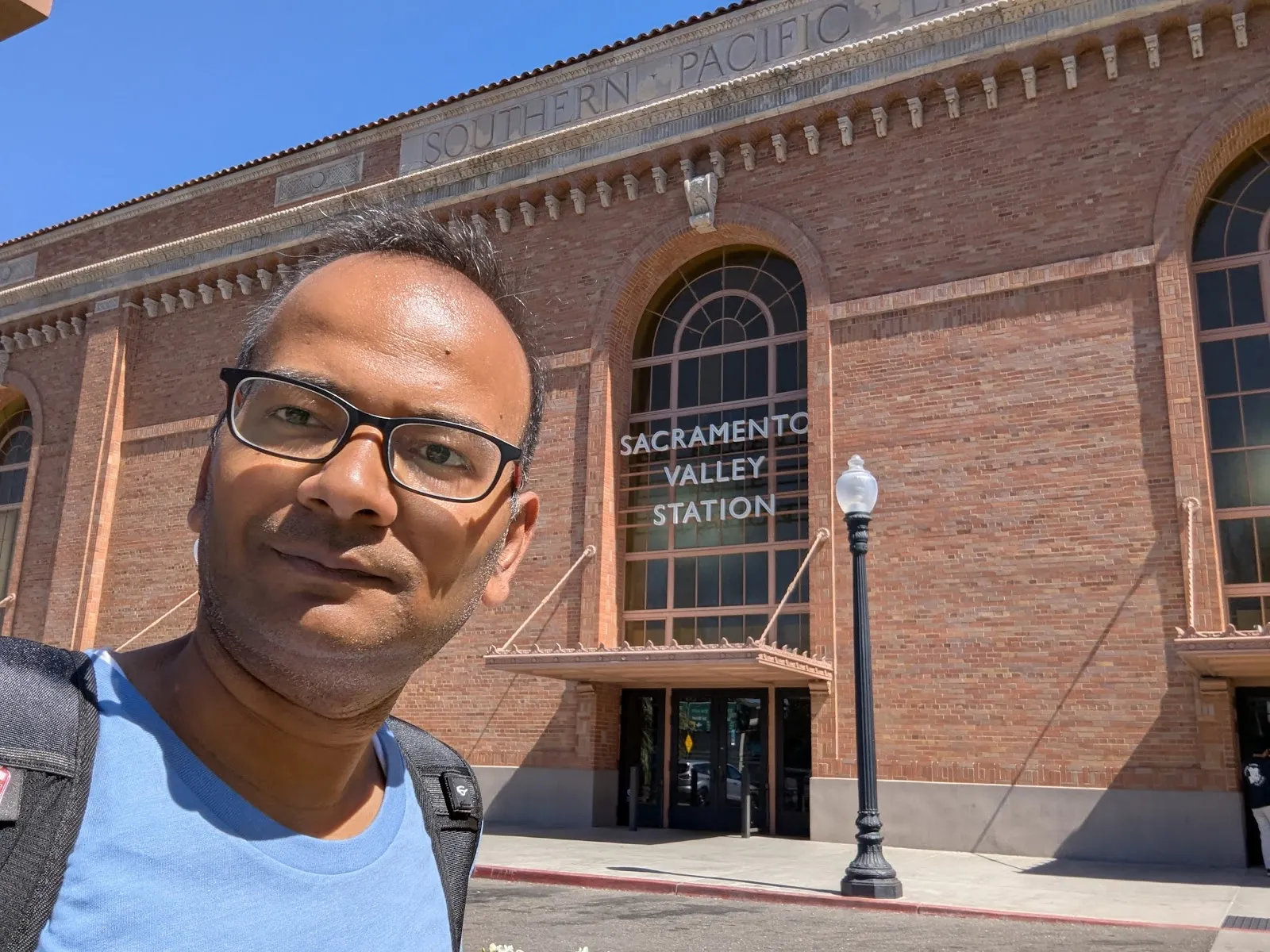
Sacramento Valley Station is the kind of train station that reminds you why train travel has a romance that airports simply cannot manufacture. The 1926 Southern Pacific brick depot is a handsome, warm-toned building with a waiting hall that carries the particular acoustics of old stations — that quality of space built specifically for the emotion of departure and arrival. No security theatre. No boarding passes scanned at three separate checkpoints. You find your platform, you board your train, and you go.
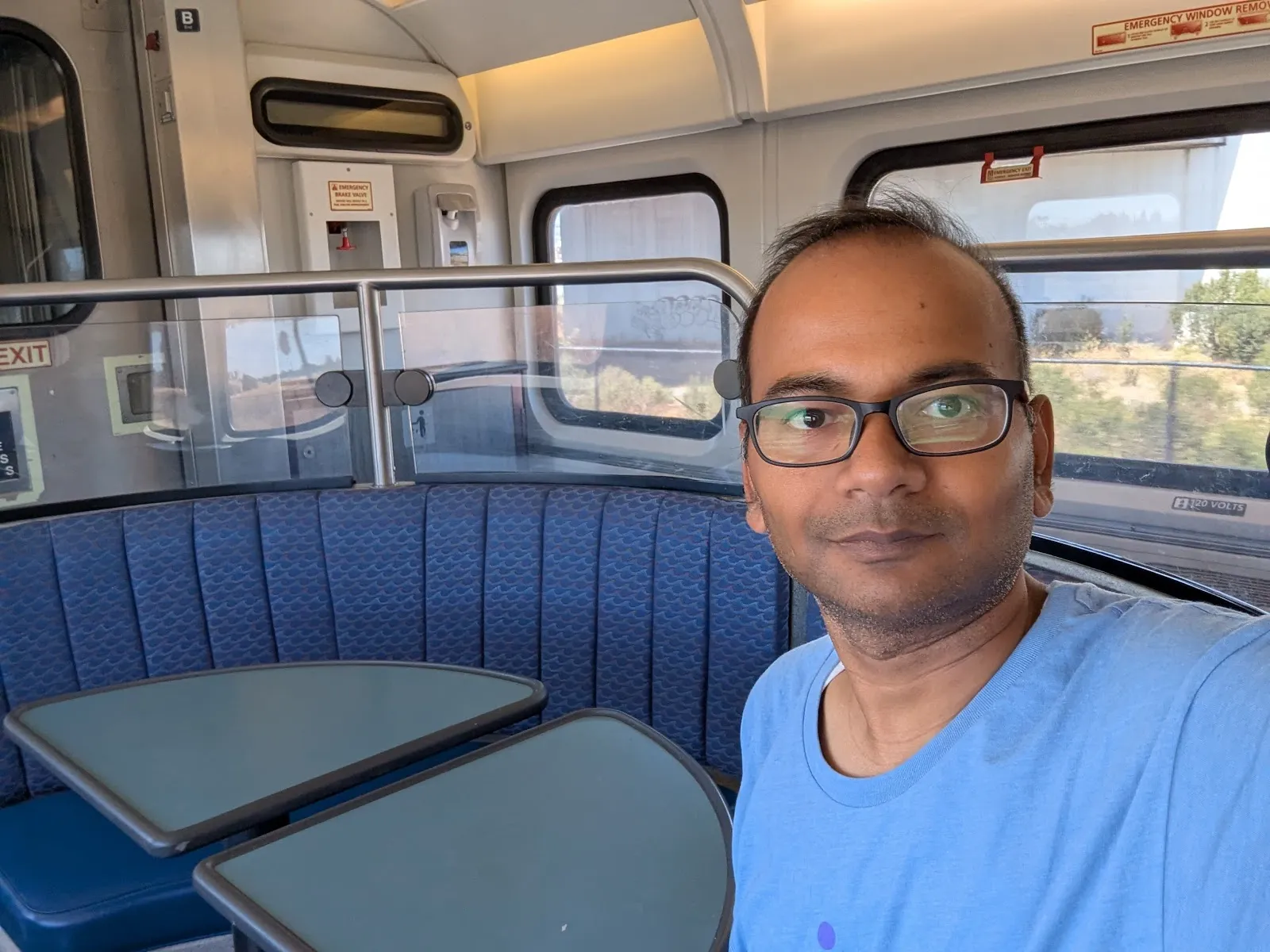
The Capitol Corridor is one of California's quieter pleasures — a two-hour regional train that glides from Sacramento through the Sacramento–San Joaquin Delta, climbs briefly through the East Bay hills, and arrives at the Bay's edge before you've quite finished your coffee. It runs on Wi-Fi, which after two days on the Zephyr felt almost exotic. I claimed a table seat on the upper deck, watched the tule marshes give way to the suburbs of the East Bay, and felt the particular satisfaction of a journey being completed.
- Route: Sacramento → Oakland Jack London Square (~2h 10m)
- Car type: Single-level coaches, upper and lower deck seating
- Wi-Fi: Available (unlike the long-distance trains)
- Onward to SF: BART from Oakland Coliseum or ferry from Jack London Square
- Amtrak Rail Pass: counts as one segment
- Frequency: Multiple departures daily — no need to rush the morning
San Francisco: First Sight
No photograph fully prepares you for the first aerial view of San Francisco. The Embarcadero curves along the waterfront in a long, graceful arc — the Ferry Building at its centre, the historic piers extending into the Bay, and the city's hills stacked improbably behind everything, terraced up slopes that most cities wouldn't have attempted to build on at all. San Francisco does not apologise for being inconvenient to inhabit.
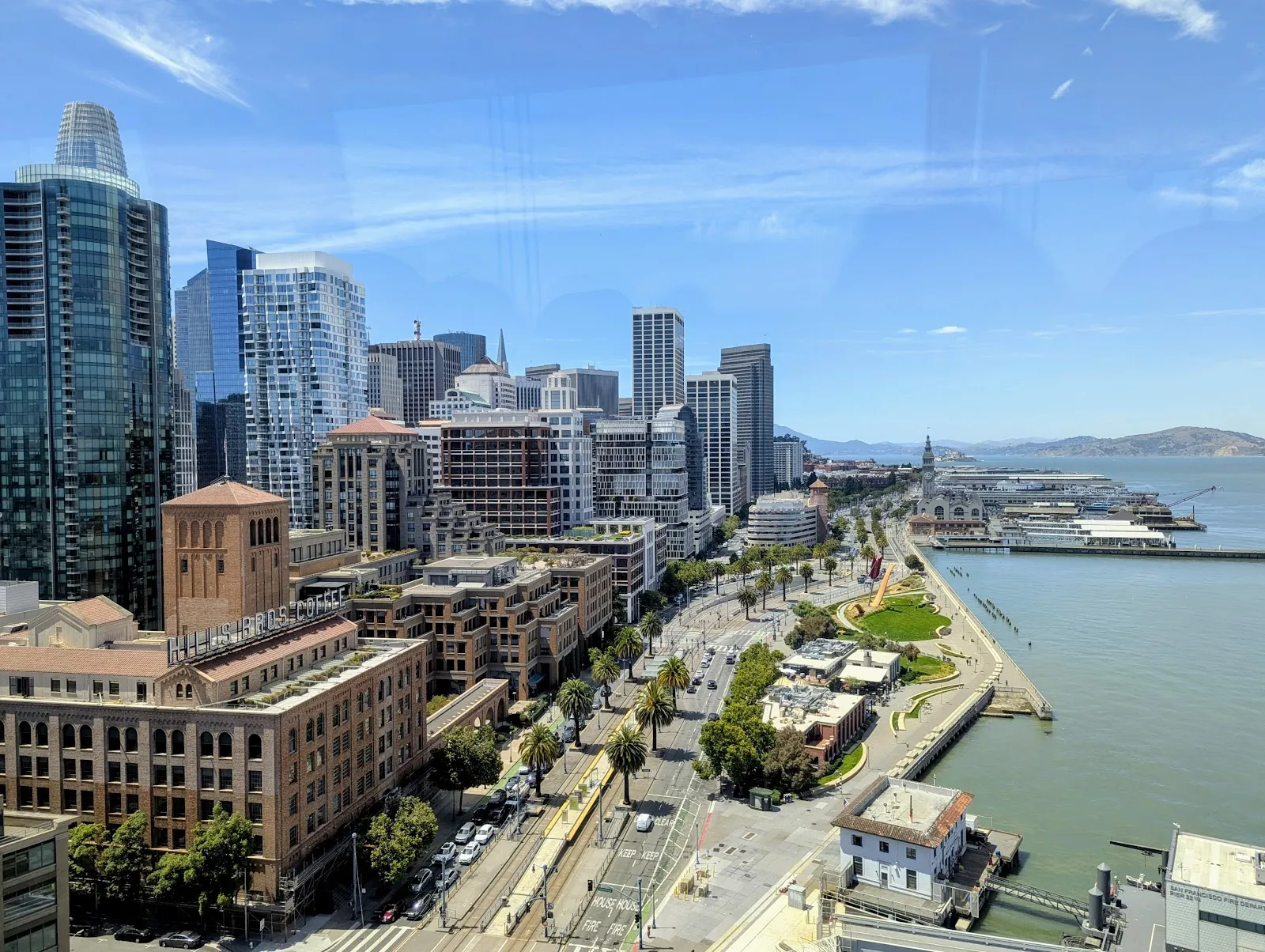
And there, two miles offshore, sits Alcatraz. You know it from photographs, from films, from a dozen passing references in popular culture — and yet the actual island still surprises. It is not large. It is not far from the city. And yet everything about its position — isolated, surrounded, always watched — makes it feel entirely apart from the city that claims it. I had ferry tickets booked for the following morning. Standing above it all on arrival, that excursion suddenly felt less like a tourist checkbox and more like a genuine encounter with something.
I crossed to the city on BART — the Bay Area Rapid Transit, which is the correct and efficient way to arrive — and walked the Embarcadero north from the station toward the Ferry Building. The afternoon light was doing what San Francisco afternoon light does in August: warm, slightly hazy, the fog not yet rolling through the Golden Gate but clearly building out at sea, promising to arrive by evening. I found sourdough and clam chowder at the Ferry Building (cliché, and entirely correct), watched the Bay light go from gold to pewter, and felt the specific satisfaction of a city that had been a long time coming finally materialising around me.
Sacramento to San Francisco. Metropark to the Pacific. Somewhere between the Hudson River and the Bay, the country had revealed itself at ground level, at train speed, the way it was actually meant to be crossed.
Day four of sixteen. The coast was just beginning.
- Capitol Corridor → Oakland Jack London Square, then BART to Embarcadero (~25 min)
- Alternatively: ferry from Jack London Square to SF Ferry Building — scenic, ~30 min
- Alcatraz: book the ferry 2–3 weeks ahead; evening tour is worth the extra cost
- Ferry Building Farmers Market: Tuesday, Thursday, Saturday mornings
- Embarcadero walk from Bay Bridge to Fisherman's Wharf: ~2.5 miles, flat and easy
- Fog arrives most summer evenings by 6–7pm — always carry a layer